 |
| Normal 747 w/Instagram filter "Shuttle" |
 |
| Airplane humor |
Shuttle Carrier Aircraft
The Space Shuttle itself cannot fly. It can rocket straight up, but so can wingless 1970’s era space capsules. And it can glide. But the Wright Brothers’ first aircraft can fly more than the Space Shuttle. So, when the Shuttle lands in California, the only way to get it back to Florida is to hitchhike. On top of a 747. NASA bought 2 jumbo jets and added supports and stabilizers to create the capable-but-unimaginatively-named Shuttle Carrier Aircraft.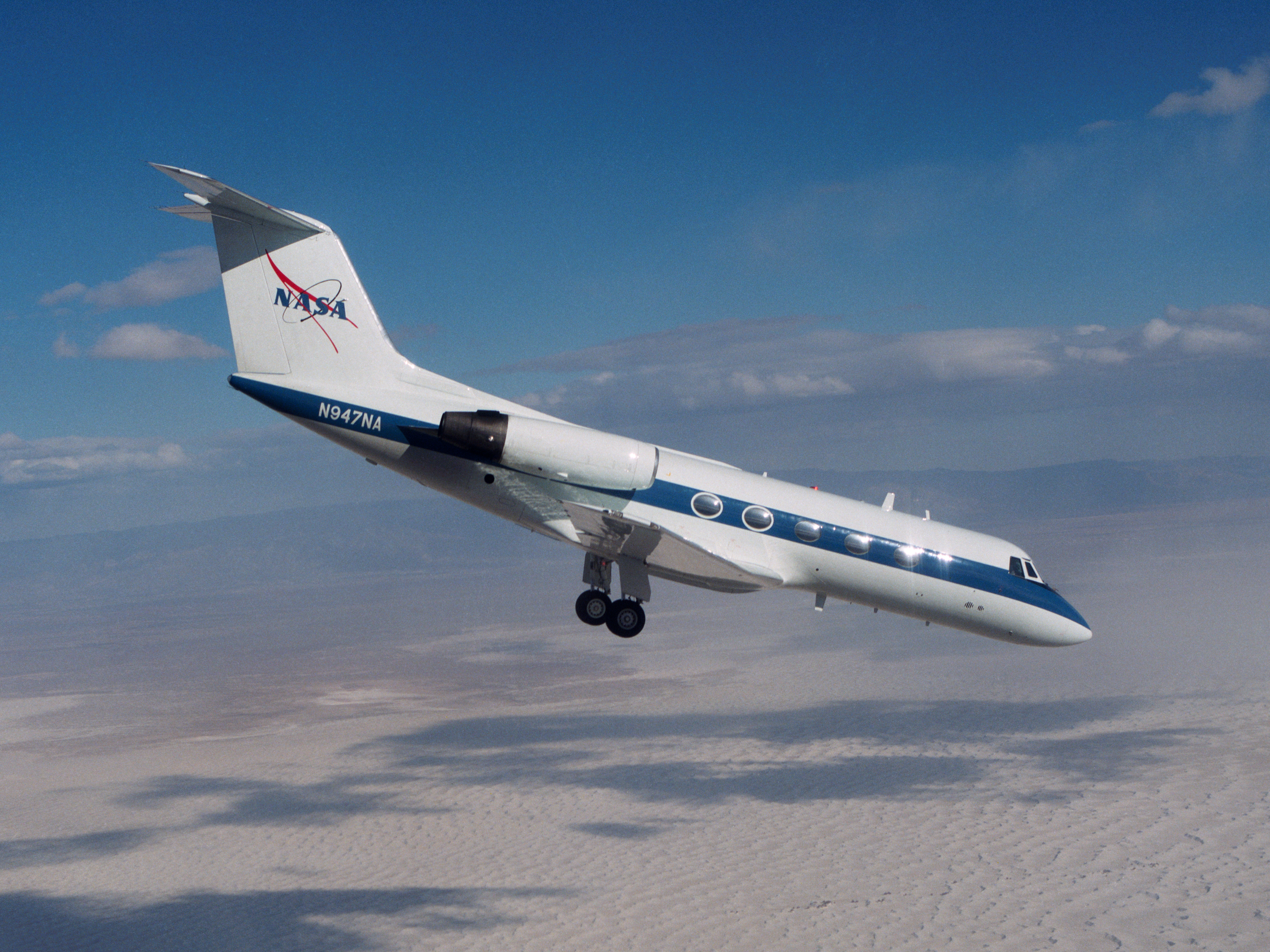 |
| I'm a Space Shuttle! I'm a Space Shuttle! |
Shuttle Training Aircraft
Oh, about the Space Shuttle not flying? When landing, the Space Shuttle is the world’s largest glider. Winds too strong? A normal airplane would circle another five minutes. The Space Shuttle is going to succumb to gravity. If you’re piloting, you’d really prefer to put those 100 tons of metal down on a runway. That takes training. More realistic training than a simulator can give you. The answer: the (again, very unimaginatively named) Shuttle Training Aircraft.NASA took a Gulfstream II (the great great grandfather of the G6 of “Like a G6” fame) and made it pretend to be a Space Shuttle. This is like making a Miata that handles like an 18-wheeler. Or a canine Freaky Friday where a Chihuahua acts like a St. Bernard. This confused identity requires three tricks:
 |
| "If your side's so great, Buzz, where's the cupholder?" |
- avionics (brains) that react slower to commands.
- a less aerodynamic plane. Simulating the Shuttle includes lowering flaps and landing gear even at 37,000 feet to slow the plane down. But even with everything deployed, a Gulfstream is still too much plane and not enough brick so the STA has to reverse thrust to be sufficiently slow. Standing on the brakes isn’t enough to make a Miata into a truck; it has to floor the gas in reverse, too.
- a Mullet of a cockpit: business (jet) on the right; party/Space Shuttle on the left.
The Space Shuttle doesn’t fly anymore and so neither will these affronts to aerodynamics. But we’ll always be able to remember, and laugh at, them.

No comments:
Post a Comment