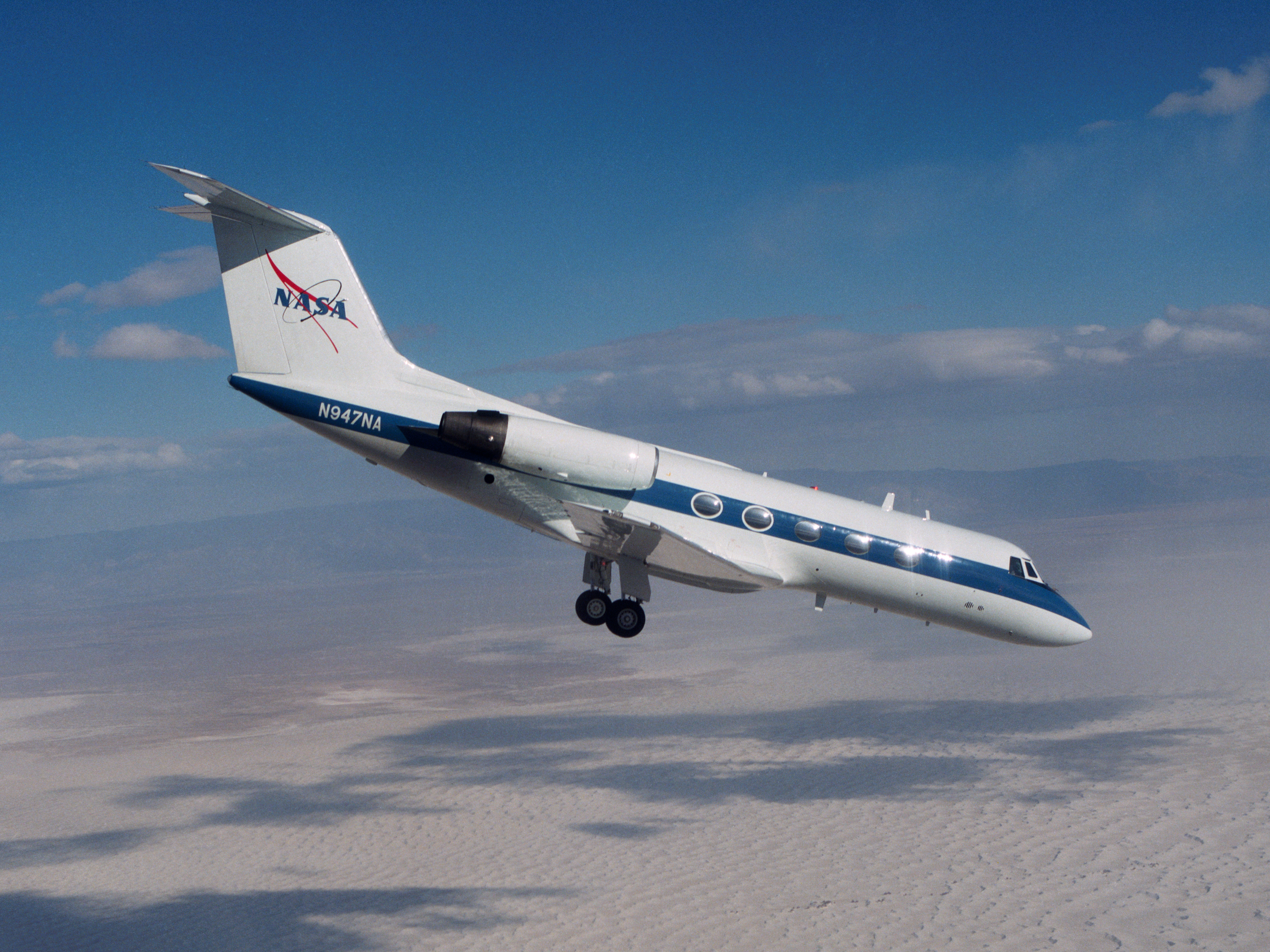
Early planes had “straight” wings: they jut out perpendicular to the fuselage. They’re easy to build and generate lots of lift. And yet no jet plane uses them. Why not?
The Sound Barrier (or as nerds pronounce it, “compressibility”). Physics predicts that going faster takes more power (black line). But close to the speed of sound, the air molecules have no time to get out of the way. Going a little faster takes way more power than predicted.
The answer is to trick the wind by “sweeping” the wing and tilting it backwards. Before, the wing hit the air at the same speed as the plane. Tilted, it is off-angle to the air and has an effective speed of the plane speed times the cosine of the tilt. This lower speed allows the plane to fly faster than the speed of sound without hitting the sound barrier.

450 mph. Planes slower than that have straight wings. Faster and it will have swept wings. The faster the plane, the steeper the sweep.
[This is a revised version of an earlier post. Fewer words, more illustrations, with bad drawing. Comments requested.]