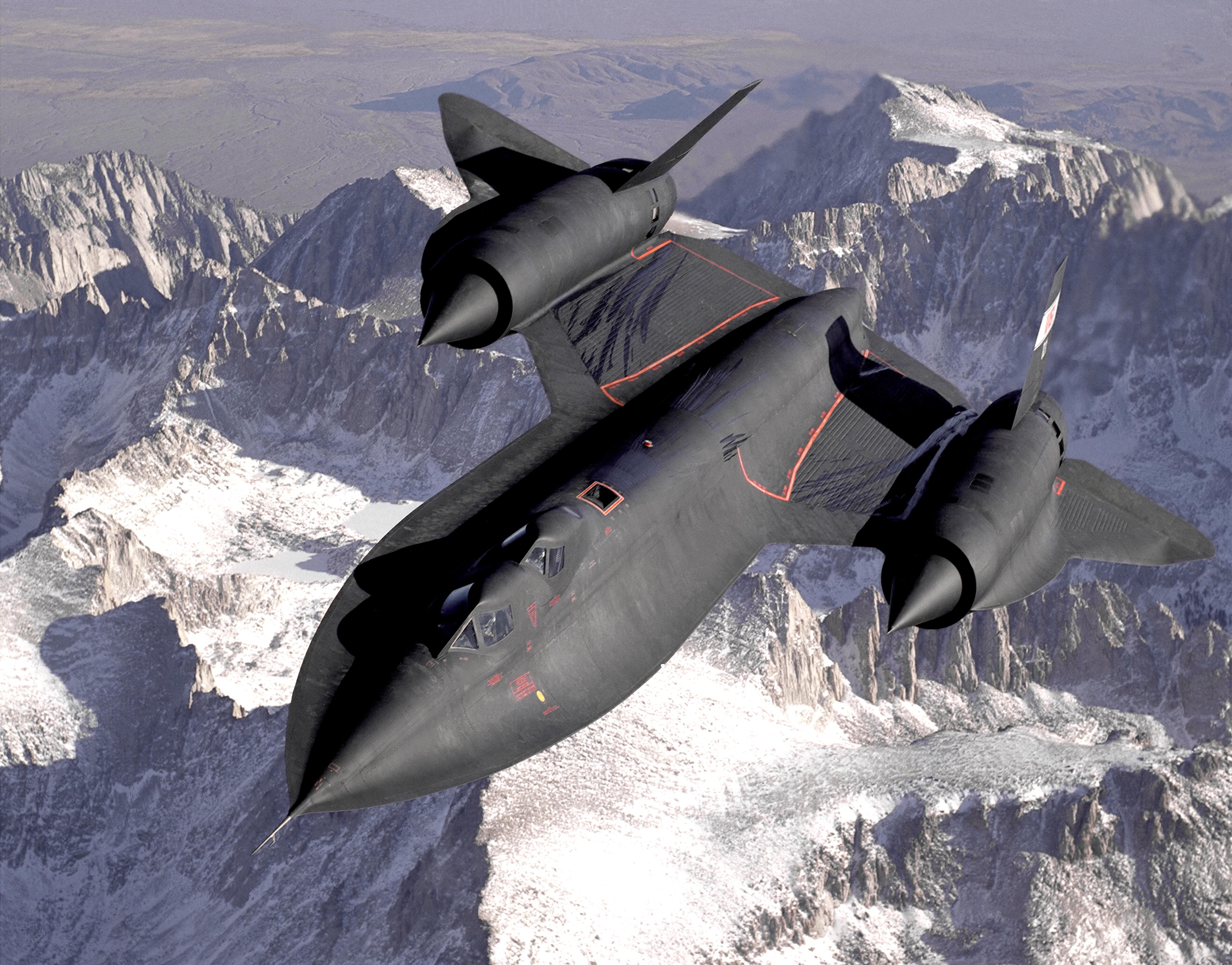
Part 1 of our story saw a theoretical advance get loosed by Moscow and land on the desk of a Lockheed engineer. Wait, that makes the story sound simple and resolved, and misses the drama of the cliffhanger we ended on! Let’s try this again:
[cue Batman music] Da na na na na na
Last Batweek, the US had this Zen idea* of turning “See but Don’t Touch” into “Nobody Here but Us Chickens” by reducing a plane’s “RCS” (how big the plane appears on radar). Out of nowhere they find this paper that calculates the RCS for simple shapes. But simple shapes don’t fly. How do you bridge the difference between this and this. Will Batman survive his precarious position? Or will Penguin and the law of aerodynamics keep him a flightless bird?
Of course, the paper does describe how to compute the RCS of more complex shapes: you break them down into many simple shapes. But this comes at a cost: much more math. So much math that it would be faster just to build the shape and test it in real life.
Between 1962 (when the paper was written) and 1971 (when the paper was discovered), math became easier: computers. Lockheed programmed a computer to take a shape and calculate its RCS. Dying to impress the Air Force with technical wizardry, they tried a new way of making a plane.
On most airplane designs, the big dogs are the Aeronautics folks. They build the best flying machine they can and hand it off to the payload people, who have to fit in as many passengers/weapons/cargo/whatever. But on this plane, a whole different sort of nerd was in charge. The *electrical* engineers found the most invisible shape and handed if off to the plane builders. Now make it fly. Oh, but if you change a single angle or corner it will undo all the benefit of this plane.
And the results? Stupendous. At a radar testing range, the operator told them the model must have fallen off the pole. Then, a bird landed on top of the model plane (on top of the pole), and the operator “found the model”. The plane was invisible to a radar set that could pick up a small bird.**
This model turned into the F-117 Nighthawk. Which performed extraordinarily over the skies of Baghdad (surrounded by the finest air defense the Soviet Union could sell to its allies). And looked like the ugliest plane ever. No really, look:
[cue Batman music] Da na na na na na
Last Batweek, the US had this Zen idea* of turning “See but Don’t Touch” into “Nobody Here but Us Chickens” by reducing a plane’s “RCS” (how big the plane appears on radar). Out of nowhere they find this paper that calculates the RCS for simple shapes. But simple shapes don’t fly. How do you bridge the difference between this and this. Will Batman survive his precarious position? Or will Penguin and the law of aerodynamics keep him a flightless bird?
Of course, the paper does describe how to compute the RCS of more complex shapes: you break them down into many simple shapes. But this comes at a cost: much more math. So much math that it would be faster just to build the shape and test it in real life.
Between 1962 (when the paper was written) and 1971 (when the paper was discovered), math became easier: computers. Lockheed programmed a computer to take a shape and calculate its RCS. Dying to impress the Air Force with technical wizardry, they tried a new way of making a plane.
On most airplane designs, the big dogs are the Aeronautics folks. They build the best flying machine they can and hand it off to the payload people, who have to fit in as many passengers/weapons/cargo/whatever. But on this plane, a whole different sort of nerd was in charge. The *electrical* engineers found the most invisible shape and handed if off to the plane builders. Now make it fly. Oh, but if you change a single angle or corner it will undo all the benefit of this plane.
And the results? Stupendous. At a radar testing range, the operator told them the model must have fallen off the pole. Then, a bird landed on top of the model plane (on top of the pole), and the operator “found the model”. The plane was invisible to a radar set that could pick up a small bird.**
This model turned into the F-117 Nighthawk. Which performed extraordinarily over the skies of Baghdad (surrounded by the finest air defense the Soviet Union could sell to its allies). And looked like the ugliest plane ever. No really, look:

Why is it so ugly and angular? Because computers in the 1970’s were so slow they could only calculate the RCS for moderately-complex shapes, engineers could only build approximations of complex shapes using simple triangles. This was all the shape 1970’s computers could manage. And just as faster computers have made video games look more realistic with higher resolution, they’ve also allowed stealth planes to be less blocky. Look at the second stealth plane:
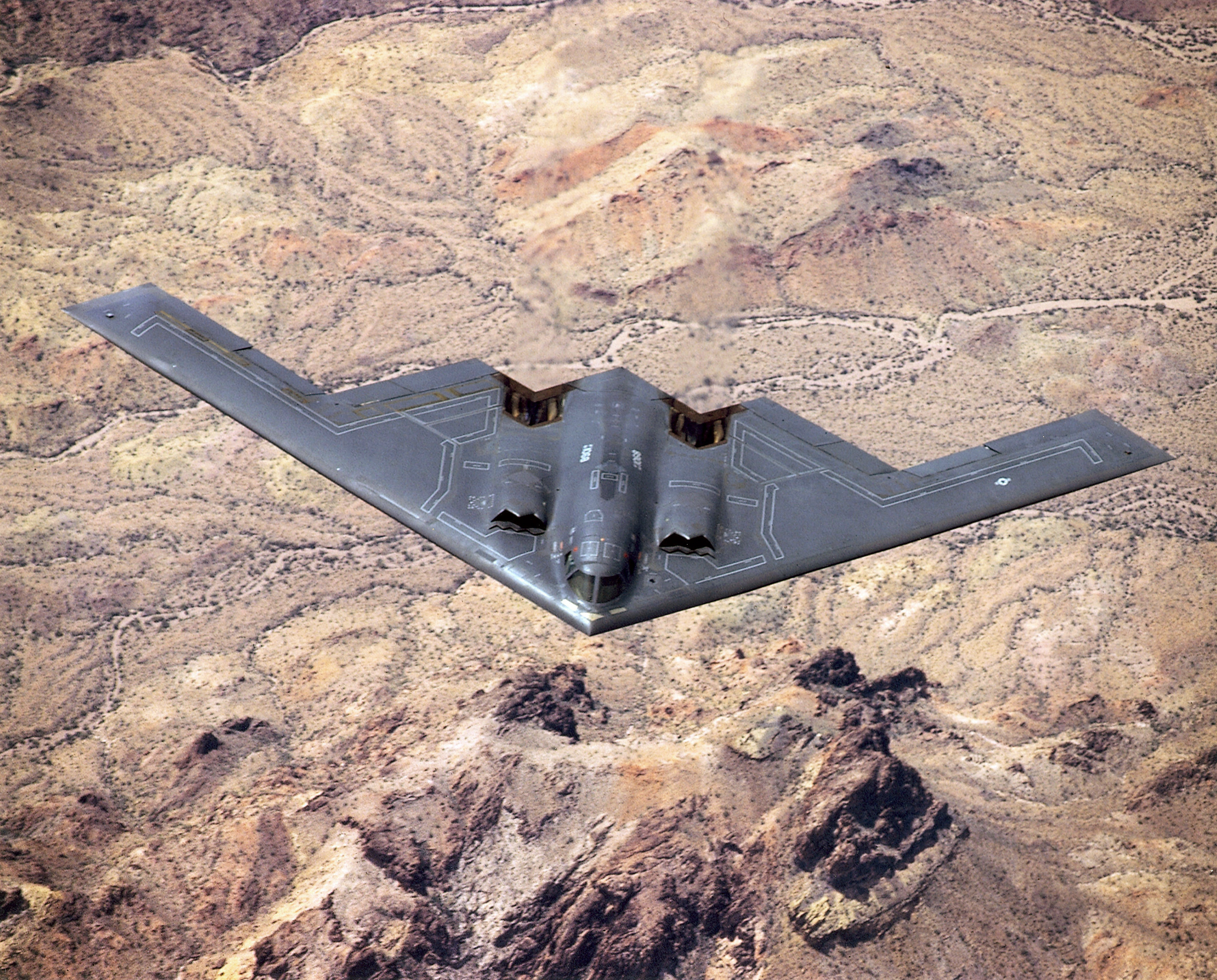
The B-2 is still a weird looking plane (based on the flying wing concept). But 8 years (F-117 first flight 1981; B-2 1989) of computer development (the equivalent of 60 years of mechanical development or 290 dog years) allowed the plane to actually have curves. And after another 8 years, the F-22 (first flight: 1997) looks like a normal plane, just with a few wobbly, stealth-inducing contours.
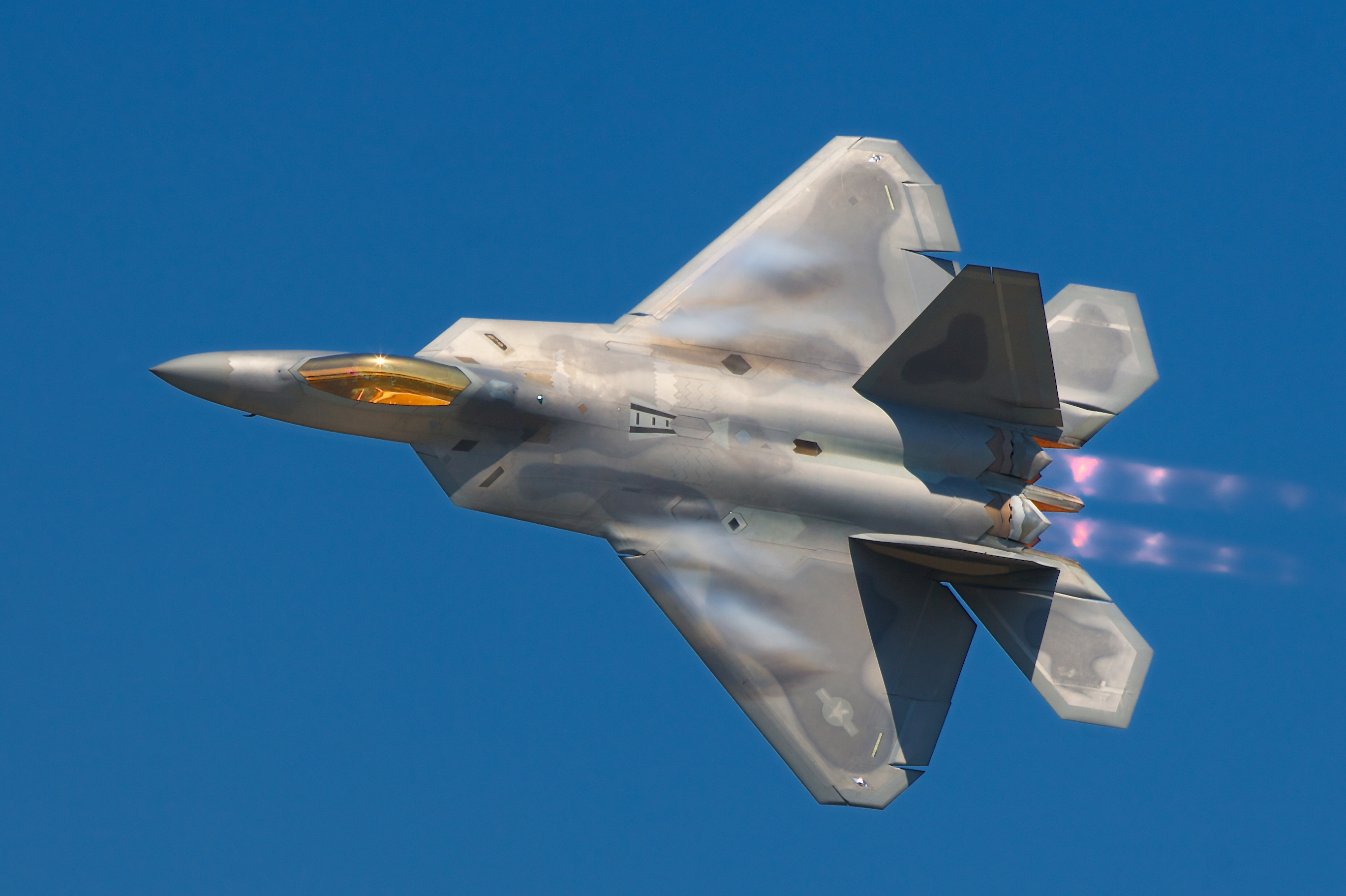
In 20 years, Stealth went from being a plane’s defining characteristic (the F-117 was called the Stealth Fighter and the B-2 the Stealth Bomber) to just another factor in a plane’s design. Today, any new combat aircraft will be stealth, and will look normal.
*Is this actually Zen? I don’t know, because there’s no “Mad Props to Zen”.
**This anecdote specifically and much of this post’s material generally come from the book Skunk Works.