Tuesday, December 27, 2011

Plane: B-29 Superfortress


The B-29 Superfortress was the last kid airplane to matter. Built by Boeing (in those days Boeing was primarily a military manufacturer), it was the big brother of the company’s earlier B-17 Flying Fortress (that plane was the star of Memphis Belle and, somewhat unfairly, any other movie you’ve seen about World War II).

The B-29 was a huge plane at the time. Compared to the B-17, it was twice as large, could fly 60% farther, and could carry 3 times as much. It’s comparable to today’s Boeing 737 and Airbus A320, the kind of plane you generally fly domestically.

The earlier Flying Fortress got its name from having so many attached machine guns (13) that it looked like a fortress. The B-29 kept the name for marketing purposes, but was as much a porcupine. Guns aren’t intersting, but their presence proves the B-29 was designed in a low-speed world: if planes fly at 600mph, their combined speed of 1200 mph is so fast that guns aren’t useful.

The B-29 is (in)famous as the plane that ended WWII. “Enola Gay” and “Bockscar” were B-29s that dropped the atomic bombs on Japan, thereby proving that such large planes were feasible and that 1940s pilots picked terrible names for airplanes.

The age of the propeller plane was past. There were 12,000+ B-17s but just under 4,000 B-29s. Boeing would sell the Air Force a further upgrade of the Superfortress (more powerful engines and various improvements) as the B-50, but only made 370 that flew in support roles until 1965.

Amusingly, the B-29’s last gasp was in China. Over the course of WWII 3 B-29s landed in the USSR. They reverse engineered every piece to make the Tu-4. It weighed more and performed worse than the original B-29 because every imperial metal thickness was rounded up when converted to metric. The Russian manufacturer built 847 Tu-4’s and sent some to its ally China where they flew until 1988.

Monday, December 26, 2011

The Jet Engine: a Transmogrifier


How jet engines work is fascinating. Unfortunately for me, I don’t really understand how they work. Which is fortunate for you, because you don’t care about how they work. So let’s examine how they changed the plane design game.

A recap: before jets, planes used piston engines (the same kind that power cars). The engines were much larger (the P-51 Mustang (c. 1944) had 12 cylinders producing 1390 horsepower, whereas a 2011 Ford Mustang maxes out at 8 cylinders producing 550 hp). In cars, the rotational energy coming from the engine spins wheels. In a plane, that energy spins propellers that push air backwards and the plane forwards.

In jets, the air being pushed backwards is the same air reacting with the fuel. This creates a lot more power: about 4x as much per pound compared to a piston engine. (This reaction also spins a turbine, which also does some of the pushing and continues the reaction. I’m not completely clear, but it seems to help).

Plane designers had a new toy. It was far more powerful, and like Wile E. Coyote with an Acme Rocket, they were eager to use it. And about as successful: this new technology had its own problems (they were flaky and dangerous) and revealed latent problems in existing designs (what’s aerodynamic at 300mph is clunky at 600mph).

Sunday, December 25, 2011

Transition to the Jet Age


You’re not a plane expert, but you see differences in planes. You can tell the Wright Flyer (c. 1903) from a World War II plane (c. 1939-1945) from a modern plane (c. 1947 onwards). Don’t believe me? Take the quiz [Here is a link to a quiz]. You’re not psychic, you’re responding to differences in the wings, engines, size, etc. Planes from the same age look similar (but not the same) because they’re designed with similar technology. It’s the same with people: you can tell if a person is a kid or an adult, even if you mistake a 12 year-old with a 13 year-old or a 35 year-old with a 40 year-old. WWII planes are kids; modern planes are adults.

In humans, all of the changes (height, surprising hair, glands) are side effects of increased hormone (testosterone or estrogen) development. In planes, all the changes are side effects of one technological improvement: the jet engine. This more powerful powerplant made planes faster, sleeker, bigger, and more comfortable.

We’re going to look at two planes (the B-17 and the B-47) made in the same country (America) by the same company (Boeing) for the same purpose (Strategic Bomber), only 12 years apart (1935 vs. 1947). But the B-17 is a kid and the B-47 is an adult not fundamentally different from the planes we fly in today. They are the endpoints of the Transition to the Jet Age, a.k.a. Plane Puberty.

Sunday, October 23, 2011

True Colors


The last plane you flew in was probably white, with maybe some decorative splashes of color and the carrier’s name. Most liveries use white as their base color. Why? They’ll tell you it’s because white looks clean, or sleek, or futuristic, or...

It’s about money, of course. Paint weighs. In the case of a 747, between 500 and 1,000 pounds. Different paint schemes weigh different. Red, with the most pigments, is the heaviest. (In general, darker or richer colors weigh more.) Every additional pound can cost the airline $100/year in jet fuel alone. 100+ pounds on 100+ planes that last for 10+ years becomes real money.

And that’s not the only way livery matters: when US Airways bought America West, they gained a hub in Phoenix. Like a goth kid in July, they realized that darker colors absorb more heat. The bigger (but just as bad) US Airways quickly adopted a lighter paint scheme.

(Oh, and my airline of choice? American Airlines uses a bare metal scheme. The lighter planes use less fuel, but there’s a trade-off: paint protects aircraft metal, so they require special and extensive anti-corrosive inspections.)

Sunday, October 2, 2011

Perspective


The way to make Jet Engines more efficient is to make them wider. [This will be discussed in another post, that will be “before” the current post.] The first jet airliner (the 367-80) was powered by 4 engines, each with a diameter of 39 inches. Today’s 777 (a widebody) is powered by an engine with a diameter of 128 inches. That’s 10 times as much area. Those numbers may sound but, but they may also sound small, because they’re just numbers. To put it in perspective:

128 inches means a friend can stand on your shoulders and you can both fit inside a jet engine.

The 777 engine is only 11 inches narrower than a 737. Not the 737’s engine, the whole plane. You could fit 5 seats and an aisle across inside the 777 engine. (That’s why people who like planes prefer widebodies.)

Air Unworthiness Certificate


The Producers of the Blues Brothers had to apply to the FAA to certify a Ford Pinto. But unlike everything we’ve discussed, this was a Certificate of Air *UN*-worthiness.

To recap (and if you need more than a recap, stop reading this and go watch it), the Nazi Car (I’m telling you, you need to see this movie) falls off the top of a parking structure. It falls for 15 seconds, looking epic with the Sears Tower in the background.

But what if it didn’t fall? What if the Ford Pinto achieved in aerodynamics what it never could hope to in aesthetics? If it was too much like a wing, it would transmogrify from dead weight into a glider, and instead of smashing into concrete, it might hit a pedestrian, or worse, an expensive building.

Producers of the movie proved to the regulators’ satisfaction that a Ford Pinto would not, in fact, fly (a fact that was common knowledge among its drivers). Ford has never advertised that it is the only car that isn’t a plane, and can prove it.

Rejected Takeoff Test


What kind of test involves speeding a 1 million pound plane up to 190 miles per hour, stopping it as abruptly as possible, and having a fire engine sit for five minutes not putting out a fire? The Rejected Takeoff Test. And why?

Airplane manufacturers promise that their planes can be safely stopped without running off the runway as long as they are going below a speed known as “V1”. And what the manufacturer promises, the FAA tests.

This test is the absolute worst case. Plane fully loaded. Brakes worn down to their minimum. (The manufacturer has a tradeoff: require brakes to be replaced sooner and the test is easier, but your plane is more expensive to maintain.) No “thrust reversers” (they turn engines into giant power brakes, but if engines fail, they won’t work). The tires get so hot that specially-designed plugs blow out, deflating the tires so they don’t explode.

The brakes glow red. A fire engines meets the test plane at the end of the runway, ready to water down the brakes. But it waits for 5 minutes (to simulate the response time in an actual emergency). The plane fails if any component above the tires or brakes is harmed, either by fire (glowing red brakes have a tendency to ignite) or by structural failure (e.g., the landing gear collapsing).

The result is a spectacle so immense and expensive that the Mythbusters can only put it on their Christmas list. Go, take a minute, and watch.

Friday, September 30, 2011

Certification: How Planes Prove They're Safe


Before a plane can carry passengers, the manufacturer has to convince regulators (the FAA in America, the EASA in Europe) that the plane is safe. To earn an “airworthiness certificate”, the manufacturer has to prove both that:
  • things will almost never go wrong
  • when they do go wrong, it’s in the safest way possible.

This belt-and-suspenders approach to safety should be very reassuring to the nervous flyer.

The simplest way to test that things will almost never go wrong is to fly. A lot. In different ways. They fly it to cold airports. They fly it to hot airports. They fly it on short flights. They fly it on long flights. From rainy airports. From desert airports. One flight, two flight, red flight, blue flight. For the new 787, one test pilot alone hit 1000 hours flying. But that’s the boring part: getting to fly a plane without worrying about passenger delays or baggage must be pleasant.

The interesting, confidence-inspiring part is testing failures. If a cupholder fails, the plane should still be flyable. If the engines fail, obviously the plane is no longer flyable, but it should still be landable. I’ll tell you about some of the awe-inspiring, crazy things they do to airplanes before you or I are ever allowed to step foot onboard.

Sunday, September 25, 2011

Types of Planes


For every job a plane does, there is a unique and special kind of plane. And of this grand menagerie of sorts and shapes of plane, you are likely to ever fly in... one. The Airliner.

In future posts, I’ll tell you about all the kinds of toys that you can see but not touch. But first I’m going to break down the different kinds of Airliner (and how the differences affect you).

The Airliner
The Airliner takes people and goods from point A to point B. Efficiency and Safety are the Airliner’s most important attributes. People have proposed lots of crazy designs, but actual airliners are tubes with wings.

In order of increasing size, the main types of Airliners are:

Regional Airliners
Regional Airliners are the planes you hate to fly. If you’re flying from Cleveland to Chicago, you’re on a Regional Airliner. If you can touch both sides of the plane from your seat, you’re on a Regional Airliner. These planes seat fewer than 100 people, with two to five people per row. They have two engines, either small jets (often on the rear of the plane) or propellers. (And if you look closely, you’ll notice they’re operated by a different company: American Eagle instead of American or DeltaConnection instead of Delta.) You would rather not be on this plane, but how often does your cousin get married?

Narrowbodies
The Narrowbody is the first Airliner worthy of the name. It seats 6 people per row, 3 on each side of the aisle. This is the plane for most flights you’ll take within the US and some shorter overwater routes (western Europe, Caribbean). Virgin, JetBlue, and Southwest fly only narrowbodies. Popular models are the Boeing 737, 757, and Airbus A320. Narrowbodies are the bread-and-butter of airlining.

Widebodies
Widebodies have two aisles. They’re easier to move around in, and they just feel bigger inside. They seat anywhere from 7 people (in a 2-3-2 configuration, i.e., 2 on the left side, 3 in the middle, 2 on the right) to 10 (in a 3-4-3) configuration. They fly transcontinental routes (New York to California) or across oceans (to Europe, Asia, or Australia). These are the planes plane-lovers love to love. They’re the majestic beauties and technological wonders. They’re powered by 2 huge jet engines or 4 still-rather-large ones. Popular models include the Boeing 747, 767, 777, 787, and the Airbus A330, A340, A350, and A380.

Monday, September 5, 2011

Boeing 367-80

[This is the first entry in a series about planes whose names lie.]

In the early 1950’s, jet engines were loud, unreliable, inefficient and the future. Plane-makers were stuck between the evolutionary (tried and true propeller-based planes) and the revolutionary (high-risk/high-reward jets). A (then-)minor manufacturer called Boeing chose revolution.

The result was the Boeing 707 (first flight 1957), the Model T of the Jet Age. Everything before it is a horse-pulled plane; everything since is a tweak.

Boeing’s huge reward from the 707 makes it easy to forget the risk involved. Airlines didn’t believe in jetliners, so Boeing built a proof-of-concept on its own dime. Boeing would need a plane to sell quickly, before more-established competitors could enter the market. Boeing ensured their head-start by keeping the project secret.

One piece of deception was naming the prototype “367-80”, which implies the 80th rework of the Boeing 367 (a pre-jet, 1942 design). These planes shared a fuselage diameter (132 inches) and little else. Boeing hoped competitors would dismiss any leaks as a warming-over of a tired concept. Boeing insisted they were bringing a knife to a knife fight while they were building the world’s first gun.

Today’s plane buffs can’t bring ourselves to pigeonhole this seminal plane as a derivative of the 367, ignoring the alleged ancestor and focus on the advance. We call it the “Dash 80”.

By Any Other Name

The Ford Mustang is a model of car. Yet, it’s not really one model. A part from a Mustang GT may fit into a Mustang V6, or it may not. A part from a 1964 Mustang would almost certainly not fit in a 2012 Mustang, and if it did it would be a horrendous waste of classic carmanship. And yet, parts from separate car models may interchange, as in the blue collar Dodge Caravan and its Yuppie-er brother the Chrysler Town and Country. A car model isn’t a technical designation but a marketing construct.

Planes have models too. 707. F/A-18 “Hornet”. DC-10. 367-80. Yes, the names are less evocative and more numerical, but this fits with the more Aspergian nature of plane enthusiasts. But the same questions come back: where does one model end and another begin? Most cases are clear cut, and hence, boring.

This week on Mad Props, I’m going to show you cases where model numbers were assigned for political and not technical reasons. Where money won out over reason. Minor upgrades that got whole new names, and clean-sheet designs that never got their due. When it comes to plane models, he who pays the piper gets to not only call the tune, but name it too.

Monday, February 21, 2011

Good Ideas: Stealth


Part 1 of our story saw a theoretical advance get loosed by Moscow and land on the desk of a Lockheed engineer. Wait, that makes the story sound simple and resolved, and misses the drama of the cliffhanger we ended on! Let’s try this again:

[cue Batman music] Da na na na na na

Last Batweek, the US had this Zen idea* of turning “See but Don’t Touch” into “Nobody Here but Us Chickens” by reducing a plane’s “RCS” (how big the plane appears on radar). Out of nowhere they find this paper that calculates the RCS for simple shapes. But simple shapes don’t fly. How do you bridge the difference between this and this. Will Batman survive his precarious position? Or will Penguin and the law of aerodynamics keep him a flightless bird?

Of course, the paper does describe how to compute the RCS of more complex shapes: you break them down into many simple shapes. But this comes at a cost: much more math. So much math that it would be faster just to build the shape and test it in real life.

Between 1962 (when the paper was written) and 1971 (when the paper was discovered), math became easier: computers. Lockheed programmed a computer to take a shape and calculate its RCS. Dying to impress the Air Force with technical wizardry, they tried a new way of making a plane.

On most airplane designs, the big dogs are the Aeronautics folks. They build the best flying machine they can and hand it off to the payload people, who have to fit in as many passengers/weapons/cargo/whatever. But on this plane, a whole different sort of nerd was in charge. The *electrical* engineers found the most invisible shape and handed if off to the plane builders. Now make it fly. Oh, but if you change a single angle or corner it will undo all the benefit of this plane.

And the results? Stupendous. At a radar testing range, the operator told them the model must have fallen off the pole. Then, a bird landed on top of the model plane (on top of the pole), and the operator “found the model”. The plane was invisible to a radar set that could pick up a small bird.**

This model turned into the F-117 Nighthawk. Which performed extraordinarily over the skies of Baghdad (surrounded by the finest air defense the Soviet Union could sell to its allies). And looked like the ugliest plane ever. No really, look:


Why is it so ugly and angular? Because computers in the 1970’s were so slow they could only calculate the RCS for moderately-complex shapes, engineers could only build approximations of complex shapes using simple triangles. This was all the shape 1970’s computers could manage. And just as faster computers have made video games look more realistic with higher resolution, they’ve also allowed stealth planes to be less blocky. Look at the second stealth plane:


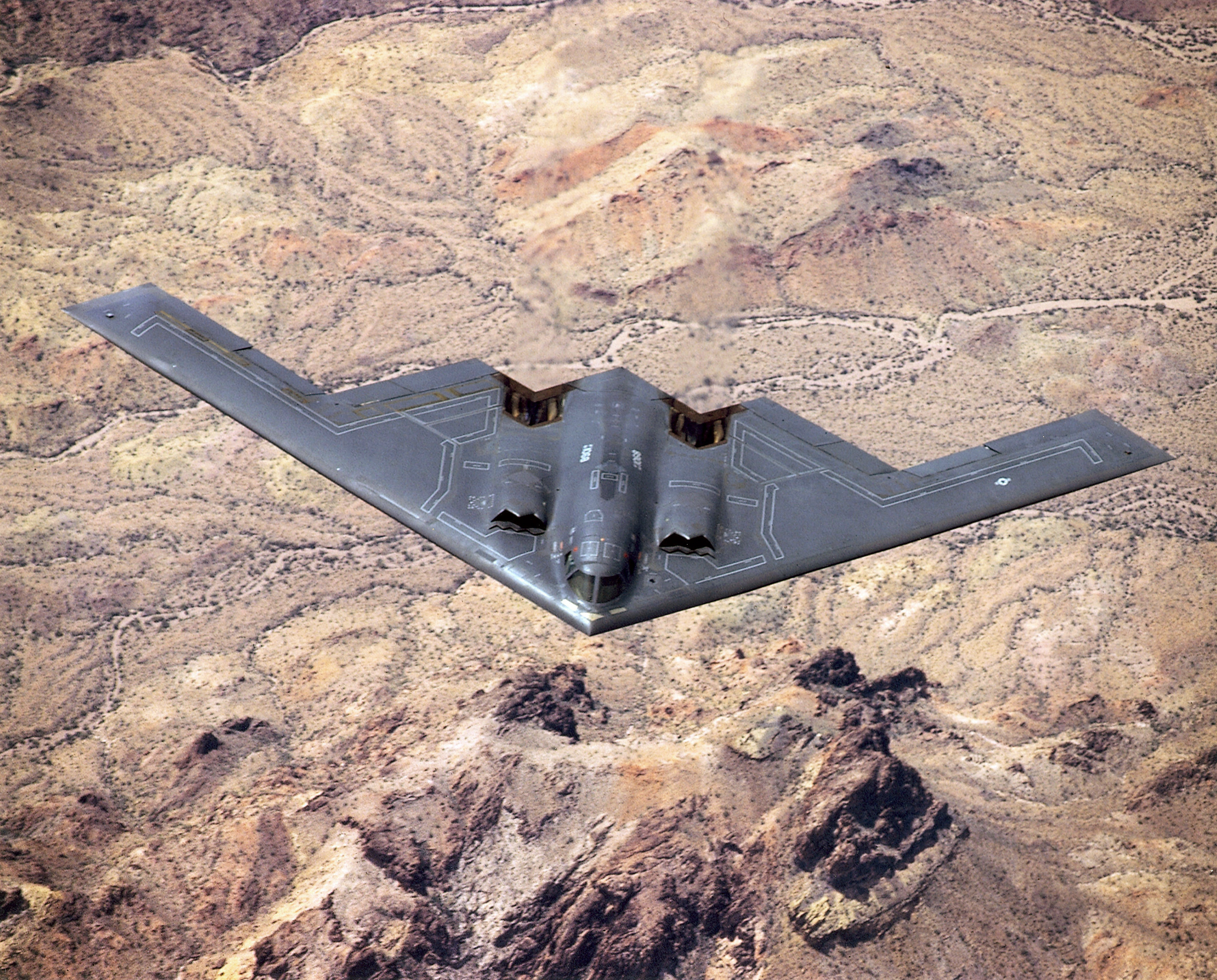
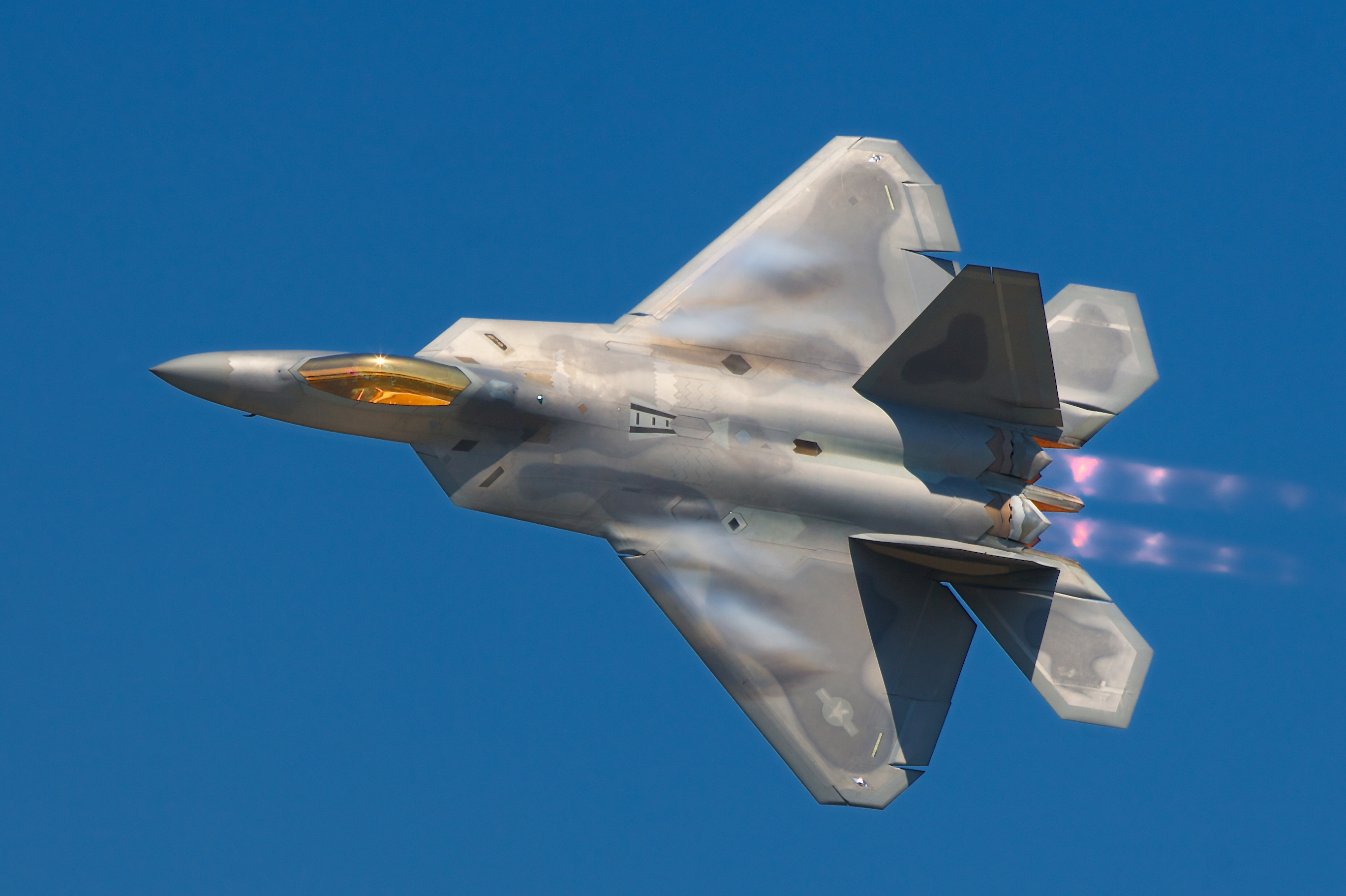
The B-2 is still a weird looking plane (based on the flying wing concept). But 8 years (F-117 first flight 1981; B-2 1989) of computer development (the equivalent of 60 years of mechanical development or 290 dog years) allowed the plane to actually have curves. And after another 8 years, the F-22 (first flight: 1997) looks like a normal plane, just with a few wobbly, stealth-inducing contours.

In 20 years, Stealth went from being a plane’s defining characteristic (the F-117 was called the Stealth Fighter and the B-2 the Stealth Bomber) to just another factor in a plane’s design. Today, any new combat aircraft will be stealth, and will look normal.

*Is this actually Zen? I don’t know, because there’s no “Mad Props to Zen”.

**This anecdote specifically and much of this post’s material generally come from the book Skunk Works.

Sunday, February 20, 2011

So That Happened: How a Russian Idea became an American technique

As World War II cooled in the 1940’s, the US built nuclear-armed planes to send deep into Russia. The Soviet Union responded in the 50’s by building Surface-to-Air Missiles that could fly up and intercept the planes faster than human-piloted planes. And so began an arms race. The US built planes that could fly higher. The USSR built missiles that could fly higher. In the 60’s, the US built planes that could fly faster. The USSR built missiles that could, well, you get the idea. And by the 70’s, there wasn’t any higher or faster left to fly. So, what was the US’s next move? The answer came from the USSR itself, in one of the more ironic (not just Alanis Morrisettical ironic) twists of the Cold War.

The reigning philosophy for military plane designers had been “See but Don’t Touch.” Planes that flew higher, flew faster, turned tighter, even planes that could send out distracting radar signals. But then, an idea. Radar operators had always known that different planes looked slightly different on radar. [Refresher: radar works by sending radio waves out, and seeing where they bounce back from. The more radio waves that bounce back, the bigger the dot on the screen looks] And that makes sense: bigger planes should look bigger. But... it wasn’t just size, or just amount of metal (the part of the plane that reflects radio). Some big planes looked small, and some small planes looked big. If they could figure out what it was that made a plane look big or small on radar, they could design a plane that looked invisible.

The solution was “Method of Edge Wave in the Physical Theory of Diffraction”, an obscure technical paper from 10 years earlier and half a world away. Published by Petr Ufimtsev, chief scientist of the Moscow Institute of Radio Engineering, it described how to calculate a shape’s “Radar Cross Section” (i.e., how big it looks on radar).

So given this gem of insight into our physical world, what did the Soviet higher-upniks do? Did they build a whole new generation of invisible planes and fly them from Havana to Washington? No. But, they had a different strategy, so the Dr. Strangelovean fleets of bombers was never really their jam. OK. So, did they classify it as a state secret and stack it up in the Russian equivalent of that warehouse with the Lost Ark? No. Because Ufimtsev’s work was only practical to determine the RCS of simple shapes. And you can’t fly a cube.

Well, maybe, you say, it’s because the USSR just really believed in openness. And, well, no. Not really. They classified huge amounts of aeronautics research. They kept secret all the data that came out of their testing programs. But anyone in the US could replicate testing data (testing data is when you carve a shape out of soap or balsa wood, throw it in a wind tunnel, and write down the numbers). No one in the US was figuring out the math of “Method of Edge Wave in Boring Theory Yadda Yadda.” The US’s coup de grace Cold War plane design is due to a Soviet Censor stamping “looks fine” on a seminal theoretical advance.

Tomorrow, we’ll cover how engineers in the US took this nugget of egghead-ness and ran with it. Ran with it to the tune of 4 awesome planes and 200 billion dollars.

Saturday, February 19, 2011

Airplanes are Awesome: a Manifesto

Airplanes are Awesome. Like chocolate. Why? First off, they fly. Awesome.

Then, some do more. Like, fly faster than a speeding bullet. Or transport 500 people. Or carry the Space Shuttle. Like adding peanut butter to chocolate, this only makes planes more awesome.

This blog is a celebration of their awesome.

Now, lots of people write about planes. From the deep analysis to the gossip, the world already has enough commentary on planes and all that surrounds them. But these are “industry” blogs. They write for the writers of other airplane blogs, or the executives they’re reporting on, or the engineers making the decisions. Their writing isn’t impenetrable, but the authors aren’t trying to expand the club.

After years of diligent reading and late-night Wikipedia-ing, I’ve learned the awesome. And when something new happens, I can chortle with Mihai or Bernardo. But why no one else? These are great stories! This is underappreciated awesome here.

I won’t relate every bit of revealed information or industry updates. I just want to take the best bits, rip them out of the jargon and the lingo, and make them interesting and accessible. So, what’s interesting about these beasts of steel and birds of industry?

First, what they can do. I’ll talk about specific planes, and why each is cool. Names that might be familiar like 707, 737, 747, 767, 787 (that’s one pattern) and A320, A330, A350, A380 (another pattern). A wider range of more esoteric military planes (SR-71, F/A-18, YC-14, and longer alphabet soups). And I’ll talk about how planes relate to one another (and how they’re different).

Second, how people interact with planes. For most people, this means airlines and airports. How you board them. How you should board them. How airplanes work. How frequent flier programs function. We’ll talk some about how frequent fliers function (and a lot more about their dysfunction).

Third, how planes are made. Which, stay with me, is awesome in its own way. Why? Planes are the largest, most expensive item made on an assembly line. Making planes has its own drama and interest. From the small (how much can one piece matter? a lot) to the large (it’s cheaper to buy Frontier Airlines than one of its planes) to the geopolitical (Boeing vs. Airbus. We’ll get there).

So who’s my ideal reader?
You don’t know much about planes
You don’t particularly want to know much about planes
But you do like hearing cool anecdotes and analyses. And if you have to learn a bit about planes to do so, well, that’ll do.


So if you already love planes, by all means, stick around and enjoy the superiority you feel at correcting my every misstep and foible. But if you don’t love planes? Well I’m jealous of you, cause you’re about to mainline the niftiest factoids about those that fly.